Sunday, July 22, 2012

The Dark Knight Rises: An Epic Conclusion to an Amazing Film Series


I’m not sure where this would fall on the list but I suppose it would be at the third spot, which would cause all others behind it to move down a notch. Last night, I saw the most incredible film that I have ever seen. I thought that I would enjoy The Dark Knight Rises, but I never imagined that a film could be quite as satisfying, entertaining, enlightening, and complete. Considering the track record that films have by the time the third act gets made, and how it usually is a bit of a letdown, I was amazed at the result.


Taken as a whole, I have come to the conclusion that the Christopher Nolan Batman films must be viewed in their entirety in order to fully embrace all that they have to offer. It began back in 2005 with the revamp of the series in Batman Begins. Here, Nolan reintroduced the character to the mass audience and developed the concept of Batman operating in a real world, realistic setting. Prior to that, the world of the films was fantastical at its best (Batman-1989) and over the top campy at its worst (Batman & Robin). While the Tim Burton take on the character in 1989 was the best effort at that point, and in my opinion, it was still somewhat apart from reality. The world Burton created couldn’t actually exist, and it was so immersed with the dark, gothic overtones that you have to wonder what would possess anyone to actually want to live there.


Nolan, by contrast, sets his Gotham City in a realistic way. He knows what common features all cities have that brings people to them and makes them wish to make their lives there, and he makes sure that he incorporates those themes into his world. The world that Nolan created is no less corrupt or free of violence than any other take on the character, but it is believable in the sense that what you watch could be happening in any city in this country.


Watching the Nolan Batman Trilogy is like watching a classic opera unfold before your eyes. The first act (Batman Begins) sets up the series by introducing the characters, explaining their motivations, and showcasing the world in which they live. The second act (The Dark Knight) puts these characters through a meat grinder and pushes the limits as to what they can achieve. The Dark Knight took the world that Nolan created and pushed it to its breaking point, and like all good opera’s, act three (The Dark Knight Rises) breaks the world in two in an effort to bring closure to the piece as a whole.


In the Dark Knight, Bruce Wayne is brought to the breaking point, mentally, as he is faced with a madman that cannot be rationalized, reasoned with, or scared into submission. The loss of his one true love, Rachel Dawes, and the one ally he had in this crusade, Harvey Dent, tested Wayne mentally to the point of breaking. In the end, Batman becomes the enemy, rather than a symbol of hope.


In Rises, he faces this test once again, but now in the character of Bane, he is tested physically as well as mentally, and is broken. What remains is then, is a chance for redemption. Wayne must redeem himself in order to save his city from the chaos that it falls into by Bane’s hands, and by doing so, redeem not only himself, but restore Batman to the symbol of hope that can inspire his city to better itself.


In spite of all the evil that is around him, Wayne believes that his city is worth saving, that the people, as a whole are good, if they would be only shown the way, and he is prepared to make the ultimate sacrifice in order to show his city the greatness that lies within itself.


It really isn’t surprising that the films work so well. Under the careful directon of Chris Nolan and his crew, performances by some of the most talented performers working today shine through. Michael Caine, Morgan Freeman, Anne Hathaway, Marion Cotillard, Gary Oldman, Liam Neeson, Christian Bale, Thomas Hardy, Heath Ledger, Joseph Gordon-Levitt, and many many more make up the world with which we watch. All promise and all deliver, tenfold.


Taken, as an individual movie, The Dark Knight Rises is quite satisfying. It grips the viewer, holds their interest throughout, and makes an epic conclusion. (A conclusion, by the way, that I believe rivals the one in the Avengers for the most epic in movie history). The Nolan film series, taken as a whole, is simply, the best film series, bar none, in movie history. All the films promised, and delivered, and by the time it was over, left the viewer completely satisfied. You cannot ask for more than that. 

Saturday, July 21, 2012

A Tempered View Of A Tragic Event


It’s been awhile since the last posting but I really haven’t been able to come up with anything interesting to write about. Then, yesterday happened.


It’s interesting to see how people react to tragic news. Many are sad, shocked, or simply numb from hearing about the situation and yet others have a completely different view on things.

Mentioning the horrific event in Colorado would be fruitless simply because many of you already know what happened. But what I find disheartening is how some people can take something like that, and turn it into yet another call for their favorite cause or to bolster their standing on a given issue.

In this case, it brought the issue of guns to the forefront, where it will be till at least next Wednesday or so. Reaction across the media, beginning with social media, and then going into the traditional media later on was swift. But rather than simply talking about what happened, many people were, only hours later, using it as a calling card to advocate either for more gun rights or stricter gun control, and frankly, to use it at that point for either position is shameless.

I believe that the 2nd amendment to the constitution guarantees the individual the right to bear arms, but I don’t advocate that position, nor do I believe in shoving my views down the throat of someone who might disagree with me. However some in the media apparently feel that any moment such as that is worthy of their bully pulpit.

Media personalities such as DL Hughley, John Leguizamo, Cher, Roger Ebert and Michael Moore took to the media yesterday to advocate for more gun control as they believed that making the right to bear arms illegal would prevent atrocities such as this. Groups such as the NRA took the opposing view that allowing people to conceal carry would prevent it. Neither position is right, or wholly true.


It is true that people who do carry on their person are able to stop horrible things from happening. Here in the last week there was a case in which an elderly man stopped a robbery at an internet cafĂ© by shooting the two armed robbers who came in demanding everyone turn over their money to them. He was trained, and knew how to handle his gun so that others wouldn’t be hurt and prevented the robbery.

At the same time, gun laws exist for a reason. John Hinckley, a mentally disturbed man was able to get a gun and attempted to assassinate President Reagan in a warped attempt to win the heart of the actress Jodi Foster. Hinckley wounded Reagan, Secret Service Agent Tim McCarthy, DC Police Officer Thomas Delahanty, and White House Press Secretary James Brady in the attempt. Reagan was surrounded by armed guards who were all packing and yet Hinckley was still able to make the attempt without being shot.


The nature of the attack and the severity of the wounds inflicted to all, but especially to Brady prompted the Brady Bill which was signed into law by President Clinton. It called for background checks and a waiting period before the purchase of a firearm, an action panned by the gun rights individuals but one that I think was appropriate.


However, in spite of all of that, there is one fact that I know will always remain true. If a person is sick in the head, and is bound and determined to inflict harm, pain, and death onto another person, they will find a way to do it. Outlawing guns isn’t going to solve anything, any more than making them easier to get is going to solve anything. If a person is willing to kill, and kill as the Colorado shooter did, making guns illegal isn’t going to stop them. I mean, look at how many people have problems dealing with drugs and addiction in this country even though drugs are illegal. It doesn’t solve anything.

There needs to be regulation, and that regulation should be strictly monitored to at least make it difficult for sickos to get their hands on guns. But people should also be given the resources to defend themselves.

Granted, I believe in the 2nd amendment, and much of this post comes from that point of view. I make no bones about that. However the problem I have with both points of view can be summed up by one of the early seasons of The West Wing. In the 2nd season, a character was introduced named Ainsley Hayes who was a Republican hired by the Democratic White House. She and the Rob Lowe character, Sam Seaborn got into a discussion about guns. Naturally, Seaborn took the antigun approach, and Hayes took the pro-gun point of view. But she said something to Seaborn that really struck home with me, and is a problem that both sides of the debate equally share.


Sam Seaborn: But for a brilliant surgical team and two centimeters of a miracle, this guy

[meaning Josh]

Sam Seaborn: is dead right now. From bullets fired from a gun bought legally. They bought guns. They loaded them. They drove from Wheeling to Rosslyn. And until they pulled the trigger, they had yet to commit a crime. I am so off the charts tired of the gun lobby tossing around terms like "personal freedom" and nobody calling them on it. It's not about personal freedom. And it certainly has nothing to do with public safety. It's just that some people like guns.

Ainsley Hayes: Yes they do. But you know what’s more insidious than that? Your gun control position doesn’t have anything to do with public safety and it’s certainly not about personal freedom. It’s about; you don’t like people who do like guns. You don’t like the people. Think about that the next time you make a joke about the South.


It’s true. And it’s something that we all must come to terms with. We can disagree, and we can debate, and when we do, it’s not always one side being right or wrong. It’s possible that both sides can disagree and both be right. But when we start hating each other for what we are, we are no different than those who would do us harm for the same sick reasons.

Tuesday, July 3, 2012

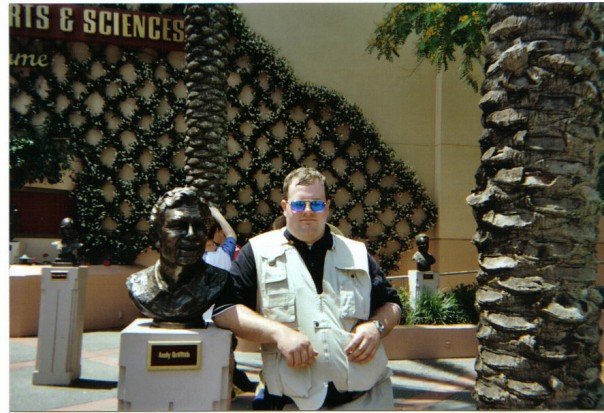
Remembering Andy Griffith


The man who created one of the iconic characters in the history of American television has passed away. Andy Griffith died today at the age of 86 years old.


I have always had a personal connection to Andy Griffith. I can remember seeing him first, when I was younger, watching reruns of The Andy Griffith Show growing up and being completely immersed into the story, characters and culture. It has been a belief of mine, that I was named after him. My mother told me that she was a fan of the show, and Sheriff Andy Taylor when she was younger. When it came time to name me, she decided to go with the name Andrew. Sure, there are many explanations as to why she settled on that name, but I have always believed that it was due to the connection with the character. Years later, when I asked her about this, she couldn't deny that it may have played a part.


Andy Griffith was a highly versatile performer. His earliest work, a stark difference to what he would later become known for, is evidence of this. One of his earliest roles was the character of Lonesome Rhodes in the Ella Kazan film A Face in the Crowd. In this role, Griffith plays a nobody who is plucked out of oblivion into the television spotlight as the host of a comedy show that takes off nationally. Overnight, he becomes a major success, and lets the fame and fortune go to his head. 


He takes advantage of those around him, and those who care about him, and mocks his fans as worthless sheep clinging onto his every word. When his is exposed publicly, he climbs to the top of a large building in New York City and denounces the world for what he believes is its own ineptitude. It is a powerful moment in film.


In contrast to Sheriff Andy Taylor, Griffith could play villains as well as good guys. One of my favorite television films stars Griffith as a rich landowner in Georgia named John Wallace, who frames one of his sharecroppers for breaking out of jail after stealing one of his cows. He, and his friends, chase this sharecropper over the county line and murder him. They take him back to their own county, and burn the body, so as to not leave any evidence. 


The Sheriff of the other county, Coweta, is Lamar Potts (played by Johnny Cash) who has as much drive and tenacity as Wallace and who, through sheer determination and a bit of luck, finds the evidence needed to convict Wallace and send him to the electric chair. It is an interesting film, and seeing both Griffith and Cash playing roles that one wouldn't normally see them in is what makes it so compelling.


Naturally, I am, still to this day, a fan of Griffith’s iconic role, Sheriff Andy Taylor. Andy Taylor is a role model for any man in this world as to what it takes to be a real man in society. He isn’t perfect (far from it in fact) but his heart, his understanding of human nature, his compassion, and his drive to always look for the good in others in spite of their personal shortcomings is what makes him that role model.


Griffith designed the show early on to make him the center of attention and humor, and the first few episodes reflect this, but quickly he realized that the show would work better if he reacted to those around him instead of the other way. He had the wisdom, and, I believe, lack of major ego to realize this, and the show was better off for it. How many others working today could or would make the same decision?


Two episodes of the show stand out to me today as examples as to why it transcends so much. The first, Opie the Birdman, finds Sheriff Taylor’s youngest son Opie (Ron Howard) firing a slingshot and kills a mother bird. Sheriff Taylor realizes this when he discovers the dead bird later. His punishment for Opie isn’t a spanking or extra chores. Rather, he opens his son’s window and tells him that he needs to listen to the cries of the baby birds that no longer have a mother. This makes a profound impact on Opie and he decides to care for the birds himself. Eventually, they grow, but cannot be cared for anymore, and Taylor convinces Opie to let them fly. It’s a classic moment in television.


The second, and by far my favorite episode of the series was called, Man in a Hurry. In this, we find a businessman traveling through Mayberry on a Sunday, when everything is shut down, and gets car trouble. He is exasperated as he can’t get anyone to fix it on a Sunday. He finally gets Gomer and Goober to do so, but it will take all day, and he is forced to wait at Sheriff Taylors home while the repairs are made. While waiting, he observes the laid back, and slow routine of a Sunday in Mayberry and it has a profound impact on him. At the end of the day, when his car is ready, he decides to stick around and relax a bit.

It’s a lesson that all of us should take to heart. A fast paced lifestyle is nice, and these days almost necessary, but every once in a while we need to take time, slow down, and appreciate small things in life.


Andy Griffith was, and is my favorite performer. He was an actor, comedian, and singer, who made a profound impact on those who had the pleasure to take in his work. He was one of the all-time greats, and one that will be missed.

Friday, June 29, 2012

Top Five Favorite Films: #1 Gettysburg (1993)


It’s been an interesting week. I don’t believe I’ve ever written as much for personal reasons, only in cases for school or work. Nor do I believe I’ve ever written about something as personal before without a clue as to if it would be read by anyone. If you have followed this blog for the past week and been amused, bemused, or at least a bit interested, then thank you for reading it. It’s been a bit of an experience.


Gettysburg (1993)


When I set out to write this week’s blog postings, I started with this one. Shortly after starting this blog I decided to write a review of my favorite film and have it posted around the time of the anniversary of the battle. This year marks the 149th year since that horrific battle which claimed the lives of more Americans than fell in all the years of the Vietnam War. July 1st through July 3rd 1863 was pivotal in the history of the United States. It was the time when our country came into its own, and became, for good and for bad, the country that exists today.


The film Gettysburg is based on the award winning novel written by Michael Shaara. It is a narrative of the battle as seen through the eyes many of the field commanders and several of the soldiers. It is a portrayal of the battle itself, but it also dives into the motivations of each of the battles many participants, and attempts to examine why and how they came together for those three days.

Primary told through the experiences of General Robert E. Lee (CSA), General James Longstreet (CSA), and Colonel Joshua Lawrence Chamberlain (USA), the viewer is taken through many of the battles pivotal moments, and we see how circumstances, faith, and ego came into play to ultimately determine the outcome.

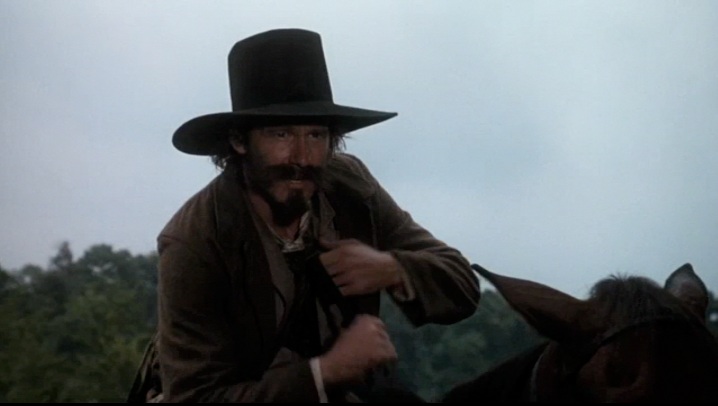
Harrison the Scout
The film opens on a lone Confederate Scout who is tasked with determining the movements of the Union Army as it chases the Confederate Army through the state of Pennsylvania. The Confederates have invaded to force a major action that will force the Union Army to suffer many losses. This would give the Confederate States the pretense to sue for peace and form their own country. The scout reports the movements of Union Calvary under the command of General John Buford who have moved into the town of Gettysburg, a small junction that seems to be in the center of everything.

General John Buford played by Sam Elliott
The Confederates attack Buford’s Calvary the morning of July 1st but fail to break the lines. Buford is then reinforced by Union infantry under John Reynolds. The Confederates move forward from all directions and are able to push back the Union Army to the ridges and hills South of Gettysburg. Reynolds himself is killed on the first day, and while the Confederates seem to have won, they, in fact, have been placed at a disadvantage.

Jeff Danials as Colonial Chamberlin
The Union Army digs in for a major action on the hills and is reinforced heavily. Lee, placing too much faith in the ability of his men to succeed, orders a full charge up into the hills on July 2nd. It is here, on the extreme edge of the Union lines that the 20th Maine Regiment under the command of Colonel Joshua Lawrence Chamberlain is able to stop the Confederate advance. After repelling attack after attack from the Confederates, and despite running dangerously low on ammunition, Chamberlain orders a bayonet charge which completely surprises the Confederates and stops the advance.

Tom Berenger as James Longstreet and Martin Sheen as Robert E. Lee
By July 3rd, Lee realizes that he is stuck between a rock and a hard place. If he withdraws, his army would have fought for two days at the cost of many lives and achieved nothing. If he attacks, he could risk losing everything. With an entire lifetime of experience working against him, he orders the only thing he thought he could, a major charge on the center of the Union lines.


This charge proves to be completely futile and the Confederates are soundly defeated. They move their way back to the south living to fight until April of 1865 when the war is finally ended.

As a film, Gettysburg focuses less on the horrific sights of battle, and instead attempts to really get to the heart of the conflict and understand what drove the soldiers, commanders, and the people of this country to resolve their differences in the most horrific way possible. By killing each other. This is, in my belief its greatest asset. War films these days tend to focus primarily on the horrible sights of war (people being blown to bits, the bloody mess and shear carnage of battle) and I believe that many times, this is necessary in order to get the feel right. But sometimes, I think that films focus on that at the expense of trying to make sense of the driving forces behind the battle.


If one is to truly understand how our forefathers (and mothers) came to believe that the only rational course of action was to kill each other, they need to really get to the heart of the conflict and listen to all the factors that played roles, instead of only those stories that reinforce pre-conceived notions.

Gettysburg tells all sides of the story. We know, of course, why some in the Union Army joined up. Many individuals could not fathom that States could simply quit the Union if they were so inclined, and wanted to preserve the country that their fathers shed blood for. Many, like Chamberlain, joined up to free the slaves of the South. They couldn’t believe that in a rational and educated society, how something as barbaric as slavery could possibly exist.

Kevin Conway as Buster Kilrain
And yet others had their own reasons. The film showcases the fictional character of Buster Kilrain who, having fled the class wars of Ireland in his youth, fights to end the idea of class warfare. When Chamberlain asks him what he thinks about the black slaves, He says one of my favorite lines in this film by simply stating;

“Well, if you mean the race, I really don’t know. This is not a thing to be ashamed of. You see, Colonel, you cannot judge a race. Any man who judges by the group is a peewit. You take men, one at a time.”

It’s one of the most poignant moments in a film full of them.

The Confederates also get the chance to tell their side of the story, and in doing so, we find that their motivations, though grossly misguided, were based more on their allegiance to their homes themselves rather than to their country. They followed a truly American belief that a man’s home is his castle, and fought to preserve that castle.


This is best exemplified by some captured Confederates, when questioned by a Union soldier as to why they were fighting.

“We’re fighting for our rats [rights]. Why can’t you people just the way you want, and let us live the way we do? Live and let live I heard some folks say. It might not such a fuss or bother if more people took it to heart.”

When you consider that the majority of the soldiers in the Confederate Army and many of the generals didn’t own slaves and still fought, you have to open your mind and really try to understand why. That doesn't mean they were right, but if one is to make sense of something as horrific as the Civil War, they need to really get to the heart of the driving forces behind it.


My favorite moments, though, feature the Confederate General Lewis Armistead. Commanding a brigade under General George Pickett, he is torn because he finds his lifelong friend, a friendship tested in battle and peacetime, Winfield Scott Hancock, on the opposite side of the battle. Armistead was like a brother to Hancock and was quite taken by him and his wife, Almira.


It’s futile to try to explain it to people who only view such companionship through the prism of modern day sensibilities, but it existed. Armistead is a solider, through and through, and though he would never consider killing his dear friend, he knows his first duty is to his home. He leads his brigade into battle on the third day and makes it closer than any other commander. It is here, that he is struck down by a shot, and to his great dismay, finds that Hancock has fallen as well. Armistead would go on to die several days later from complications from his wounds.

Armisteads death is even more poignant when you consider that the actor who played him, Richard Jordan died from a brain tumor shortly after filming.
There was much more to the story than the movie portrays. Many key moments are left out, as well as an explanation that General Grant, on the same day as the battle, proved successful at the Battle of Vicksburg thus cutting the Confederate States in two. The two battles provided the key turning point of the conflict and the country would be changed forever. It is not a perfect film by any standards, including my own. But I have never seen a film that really explained why an event such as the Civil War could have been fought in the first place or how each participant came to believe in their righteousness of their cause. Justice, honor, truth, and bravery have never been made as clear, and when you are forced to view the motivation of your enemy through their eyes, you might find them to be just like yourself.


Given many of the issues we face daily, it’s a lesson that I wish more people would take to heart.

Thursday, June 28, 2012

Top Five Favorite Films: #2 Apollo 13 (1995)


All this week, I have been reviewing my top five favorite films and explained how each came to be on the list. I may, at some future point, move to the top ten, but for now these will suffice. To recap;


#2 Apollo 13 (1995)


Among my friends, there are a number of films that we sometimes find ourselves quoting depending on a given situation, usually in an attempt to be funny. Whether it’s a scene from Twister, Office Space, or SuperTroopers, there is usually one line that fits in a given situation. The same can be said for Apollo 13.

It’s only been recently that I decided that this film is my second favorite film of all time. In a way, it’s something I’ve always known, but I never really wanted to admit to myself. The fact remains that I’ve seen this particular film more times than any other film. When I was younger, and we would visit my grandparents, we would watch this film. They owned it, and it seemed like it was the thing we would do each and every time. Through the years since it was released, I have viewed it on each available format, and owned each available format. I can quote the film at length, if not the entire film itself. But given all of that, it isn’t enough to place it on this list, especially at this position, so why?


Well, simply put, the film contains many of the things I look for in a great film. It has a great story, rich characters, tension, amazing effects, awesome score, a historical film, and above all, it is highly entertaining and fun to watch.

Apollo 13 is the story of the ill-fated mission to the moon back in April 1970. Apollo 11 lands on the moon in July 1969 and Neil Armstrong makes the first steps, thereby wining the so called Space Race, and fulfilling the goal of President Kennedy to beat the Soviet Union to the moon. NASA has many future missions planned, but public confidence in the program has waned and people have moved onto other matters.


The film centers on the participants of the mission. Jim Lovell (Tom Hanks), Fred Haise (Bill Paxton), Ken Mattingly (Gary Sinise), and Jack Swigert (Kevin Bacon). Additionally, the astronaut’s families, primarily Marilyn Lovell (Kathleen Quinlan), are featured as well as those in Mission Control, which is led by Eugene Kranz (Ed Harris).

The superstition around the number 13 comes into play a bit as the mission suffers some setbacks. Lovell and Co. were originally supposed to fly on Apollo 14 but the crew led by America’s first astronaut, Alan Shepherd, is grounded. Then a few days before launch, Mattingly, is exposed to the measles by backup, Charlie Duke, and the backup, Swigert, is brought in to replace him. Then while enroute and close to the moon, suffers an explosion in its oxygen tanks. The mission to the moon is over, and the crew must now use their brains and available resources to get back to Earth. Mission Control is then moved into action, tasked with providing the astronauts with all the support it can from the ground, and the pain and anguish that the families suffered while not knowing what happened or if their loved ones will return.


And when compared to real photos of the time, you can see the filmmakers captured the essence completely

Apollo 13 is an epic film, told through the lens of history and through the voices of all the participants. The film flashes between the space ship itself, Mission Control, and the home front, keeping tabs on what was happening in each. It is through this narrative structure that the real story lies. We see how all of these factors played significant parts in order to have these men return to Earth alive, and a bit of the true cost of exploration and discovery.


What makes Apollo 13 a bit better than many other films set in space as well is the fact that it was actually shot in space, in a manner of speaking. While doing research for the film, the producers liked the idea of using the weightlessness in the film itself and had the sets built inside the cargo plane that is used for that training. Then, in a series of flights, were able to shoot many of the scenes that take place in space. As opposed to other films which would simulate such an environment, the film opts for the real thing.


However, I believe that the best moments in the film belong to the Mission Control. Here are the brightest minds in the world all in one room and are tasked with determining courses of action which can be helpful or fatal to the crew. They have no ability to see any more than the readings on their consoles and have to rely on information and educated guesses in order to make life or death decisions. And Harris captures the essence of Kranz completely.


Gene Kranz is a bulldog general, who demands as much out of his crew as he does himself. He keeps everyone in check with reality and drives the team to find solutions that would otherwise not be considered, and he refuses to accept anything but total victory. One of my favorite lines, ever spoken on film is spoken by Kranz as he assembles his team.


KRANZ: “We’ve never lost and American in space and we’re sure as hell not going to lose one on my watch. Failure is NOT an option!”

It’s a great mantra to adopt and one which I try to take to heart and live by. Truth is I have always been a fan of Kranz and largely due to Harris performance in this film, I once wrote to him, thanking him for his service. He sent me back an autographed copy of the Mission Control mission statement, which remains today one of my most prized possessions.


In spite of its virtues, the film does contain two moments which have never set well with me, one, involving Lovell’s young son. Early in the film, while talking with his son about the Apollo 1 fire, which killed three fellow astronauts, Lovell tells him that the door malfunctioned and failed to open which led to their deaths. After the accident, when Marilyn tells this young boy about the accident, he innocently asks “Was it the door?” The moment, in and of itself isn’t much but, for some reason, it always sounds like nails on a chalkboard to me each time I view the movie.


The other scene is shortly before the accident, when the Lovell family is at Mission Control to watch a closed circuit broadcast from the spaceship. None of the networks had an interest in carrying this broadcast so the families came to Mission Control to view it. As they go to leave, the fictional NASA Press Officer, Henry Hurt (played by Xander Berkeley) leans in to Lovell’s 16 year old daughter and says “hey” much as a creep would do while hitting on women at a bar. It’s not much, and doesn't add anything to the story, nor is it a long moment, but I always found it to be a bit out of place and unsettling.


In spite of those moments, the film remains my second favorite film of all time. As I noted above, I have owned this film in just about every format that it exists in. Just looking at my iTunes log, I have viewed it ninety-four times as of this writing, and that’s just one format. Any film viewed as much would have to resonate with the viewer and Apollo 13 does. It is a gripping epic of survival and a showcase of the talent, wisdom, and attitude that makes America great. It is a story of all of us. Frankly, as said by Gene Kranz himself, in response to all the factors going against the mission right before reentry:


And, it was.

Wednesday, June 27, 2012

Top Five Favorite Films: #3 The Avengers (2012)


All this week, I have been reviewing my top five favorite films and explained how each came to be on the list. I may, at some future point, move to the top ten, but for now these will suffice. To recap;


#3 The Avengers (2012)


At first glance, it would seem that including a film that I only first saw a couple of weeks ago, let alone making it a top five favorite film, would be asinine, and frankly, I can understand that. On paper, this is a film that had everything going for it, and everything going against it. Marvel Pictures set up all of the main characters in a truly remarkable fashion, which did nothing but raise expectations on this film to completely ridiculous levels. There was simply no way the film could ever be as good as expected because the bar was set so high. And yet, upon viewing The Avengers, all of those factors came together to craft a great piece of film.

I wonder what the planning process was originally for this film. Was it to simply tell the story itself, diving into the characters backgrounds in the short span of time that the film could give? Perhaps, but somewhere along the like, someone got the bright idea that it might work better to introduce, or reintroduce each main character in their own story and then pull the best features from each of those stories and combine them together into one large film. By combining the talents and established characters of Tony Stark (Iron Man), Bruce Banner (Hulk), Natasha Romanoff (Black Widow), Thor, Steve Rogers (Captain America), and Clint Barton (Hawkeye) into one grand epic, and yet not allowing the enormity, or ego of each dictate the rules of the film over the others, is what makes it such an amazing feat.


The film begins at a secret research facility run by the Strategic Homeland Intervention, Enforcement and Logistics Division, or SHIELD. Run by a mysterious and charismatic individual, Nick Fury (Samuel L. Jackson), the agents of SHIELD are trying to tap the power hidden inside this blue cube, (first seen in Captain America). The cube contains what is purported to be unlimited power. But before they can, they are attacked by Loki (Tom Hiddleston), brother of Thor and banished from Asgard, the home world of Thor.


Loki intends to use the cube to open a portal into another world in an attempt to bring an army to earth to conquer and rule it. His initial attack succeeds and Fury is then forced to initiate the Avenger’s Initiative, a secret project that would only be used in extreme circumstances. The first part of the film is the rounding up of all the various players from each of the previous movies and making them jive together in a working mechanism. Predictably, this doesn’t happen at first as the different characters and egos are exploited by Loki in an effort to gain the upper hand. However, extreme and deadly measures taken by Loki bring each of the fabled parts together in perfect motion to bring the battle literally to Loki’s (and Starks) front door. What happens thereafter is what can only be described as the most epic final showdown in movie history.


There is so much to love about The Avengers. It is an action film that doesn’t take its own material so seriously that it forgets to inject humor at appropriate moments. It’s an interesting take on character and motivation, as well as what factors can drive that motivation, and it doesn’t fall into the typical pitfalls that most team up films fall into. Sure the main characters get into a pissing contest with each other, but only in a manner which makes sense to the overall plot. Loki also serves as an excellent foil in being able to frustrate each of the main characters and still maintaining that selfish and childlike ego that despots throughout history have all shared. Loki is quite pathetic, but when someone like this also has access to powers and abilities, it can combine for a deadly combination.


No performance outshines another. Robert Downey Jr. brings the raw brains, brawns and large ego of Stark so memorably portrayed in the first two Iron Man films, Mark Ruffalo, replacing Edward Norton, finds the conflicted nature of Banner and the fine like he walks with gusto, Chris Hemsworth channels the reserved nature of Thor, and Chris Evans brings back the heart and determination of Steve Rogers. One line in particular best describes Rogers approach to a situation. When told that Loki and Thor are like gods among men, Rogers, very matter of fact, responds, “There’s only one God, and I don’t think he dresses like that.” Rogers, a natural leader, isn’t swayed by all the fantastic things happening around him. He keeps his mind focused on the mission at hand.


Scarlett Johansson and Jeremy Renner as Black Widow and Hawkeye also are amazing to watch. First appearing as minor characters in earlier films, the two have a bit of a history together, and despite not possessing any of the amazing powers of the others, can hold their own as efficiently. They both deserve to fight alongside the rest. Other performances, from Cobie Smulders, as Agent Hill, and Clark Gregg as Agent Coulson are also great. Smulders takes what would normally be an eye candy role and makes it a fully formed character who can hold her own against any adversity, and Gregg, having played Coulson in each of the previous films, is the silent catalyst that not only brings all the Avengers together but becomes the glue which cements all the parts into one formidable machine.


The Avengers works, because it took the best parts of each earlier film, and combined it into one major epic. I would contend that to truly appreciate the film, one must view each of the proceeding chapters, (Iron Man, The Incredible Hulk, Iron Man 2, Thor, and Captain America); much like you would if viewing a series such as Star Wars or Harry Potter. Though, frankly it isn’t necessary. I saw the film with my sister, who hadn’t seen any of the proceeding films, and she enjoyed it as much as did I.

Going in, I wasn't really familiar with the characters as I never read the comics. So I approached it with an open mind. The meter by which I judge most films is was it entertaining, and/or fun. With The Avengers, you get the best of both. It’s been a couple of years since I’ve seen a film that was as much fun to watch as The Avengers, a truly remarkable film.